Naag Panchami Puja & Homam
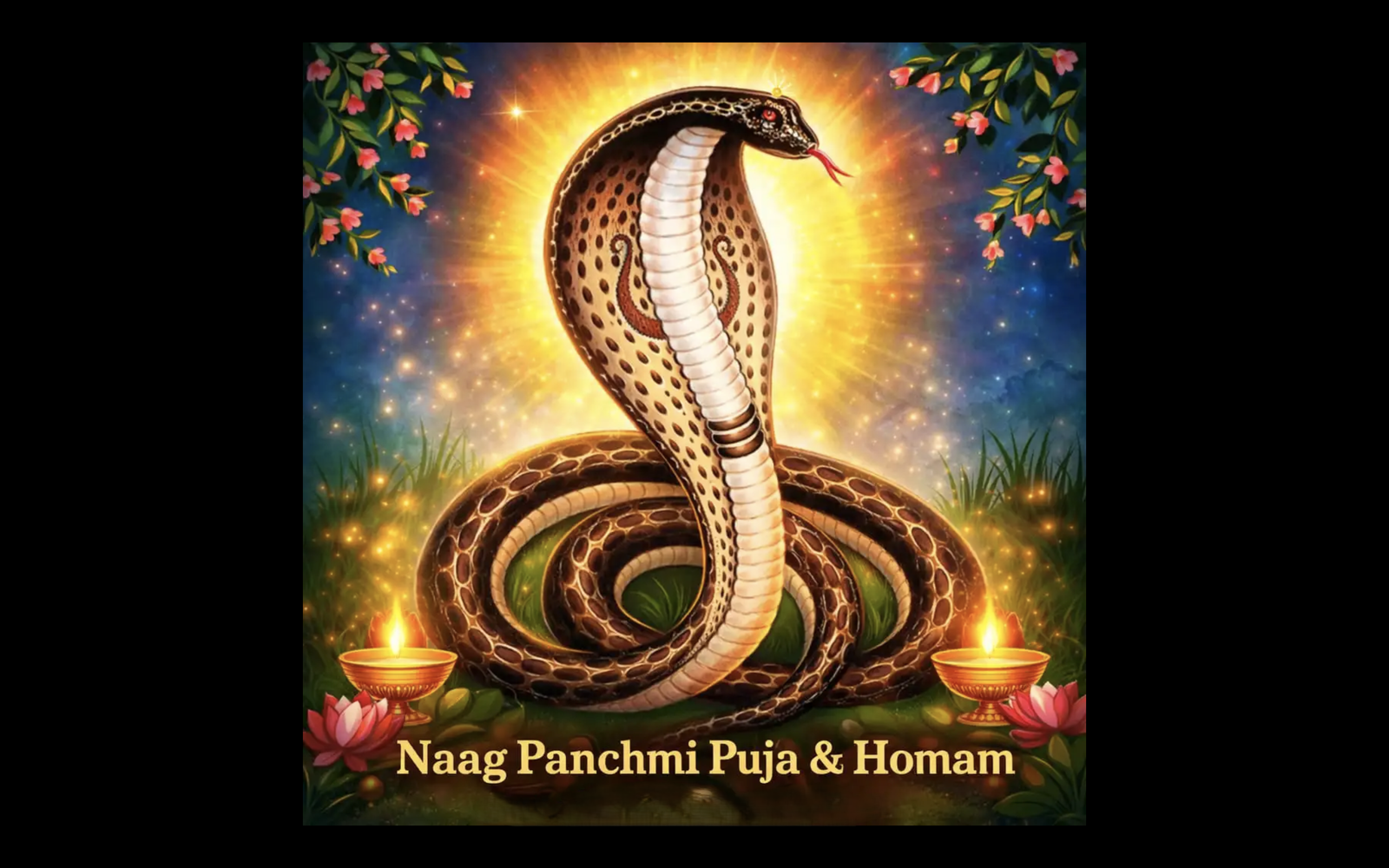
The Naag Panchami Puja & Homam is a highly auspicious ritual dedicated to the Nagas (serpent deities) performed to seek protection, prosperity, and blessings. It is a powerful remedy widely used in Vedic astrology to neutralize the malevolent effects of Kaal Sarp Dosh, Rahu-Ketu afflictions, and ancestral curses (Pitri Dosh).
n Hindu culture, serpents hold a profound spiritual significance and are deeply intertwined with major deities—such as Lord Shiva wearing the King Cobra (Vasuki) around his neck and Lord Vishnu resting upon the multi-headed serpent (Sheshnag).
The festival of Naag Panchami occurs during the holy month of Shravan. When performed as a dedicated Puja and Homam (fire ritual), it serves as both a protective shield and an act of cosmic alignment. Devotees honor the prominent celestial Nagas (such as Ananta, Vasuki, Shesha, Padmanabha, and Kambala). The ritual acts as a gesture of reverence and an apology for any accidental harm caused to nature and living serpents, transforming negative energy fields in a person's horoscope into sources of strength, vitality, and unexpected fortune.
Mitigation of Kaal Sarp Dosh: Neutralizes the intense hardships, sudden delays, and continuous struggles caused by the positioning of planets between Rahu and Ketu in a horoscope.
Protection from Poison & Severe Ailments: Invokes divine protection against venomous bites, skin allergies, chronic diseases, and unexplainable physical fears.
Removal of Financial & Career Blocks: Dispels sudden stagnation in business and professional growth, inviting continuous prosperity.
Resolution of Pitri Dosh & Lineage Issues: Grants peace to ancestral souls, clearing path-blocks for family extension or childbirth issues (Santan Prapti).
Harmony in Marriage: Resolves severe frictions, misunderstandings, and delayed marriage issues linked to serpent curses or afflictions.
Step 1: Altar Setup & Abhishek: Silver, clay, or stone idols of the Nagas are cleansed and placed on a clean platform. A ritualistic bath (Abhishek) is performed using milk, water, honey, and rosewater.
Step 2: Sankalp (The Solemn Vow): The priest states the devotee's birth details (Name, Gotra, Nakshatra) and channels the specific intention—whether it is general well-being or relief from a specific Kaal Sarp Dosh.
Step 3: Sacred Offerings: The serpent deities are offered fresh white flowers, haldi (turmeric), kumkum (vermilion), parched rice (lava), and a special offering of milk mixed with sugar or sweets.
Step 4: Mantra Chanting: The priest and devotees chant powerful Vedic mantras and stotras dedicated to the Nagas, such as the Navnag Stotra or the Rahu-Ketu peace mantras:
Om Navakulaya Vidmahe Vishadantaya Dheemahi Tanno Sarpa Prachodayat
Step 5: The Homam (Fire Ritual): A sacred fire pit is lit. Special herbs, samriddhi sticks, and clarified butter (ghee) are offered into the holy fire while chanting targeted hymns to pacify the serpent energies.
Step 6: Purnahuti & Aarti: The fire ritual concludes with the ultimate offering (Purnahuti). A camphor Aarti is performed, and devotees receive the holy ash (Bhasma) as a protective talisman.
No reviews yet. Be the first to review this puja after booking.
Login to write a review.
Related Puja Services